The ideal attachment for circular demolition
10-09-2026Separating at source
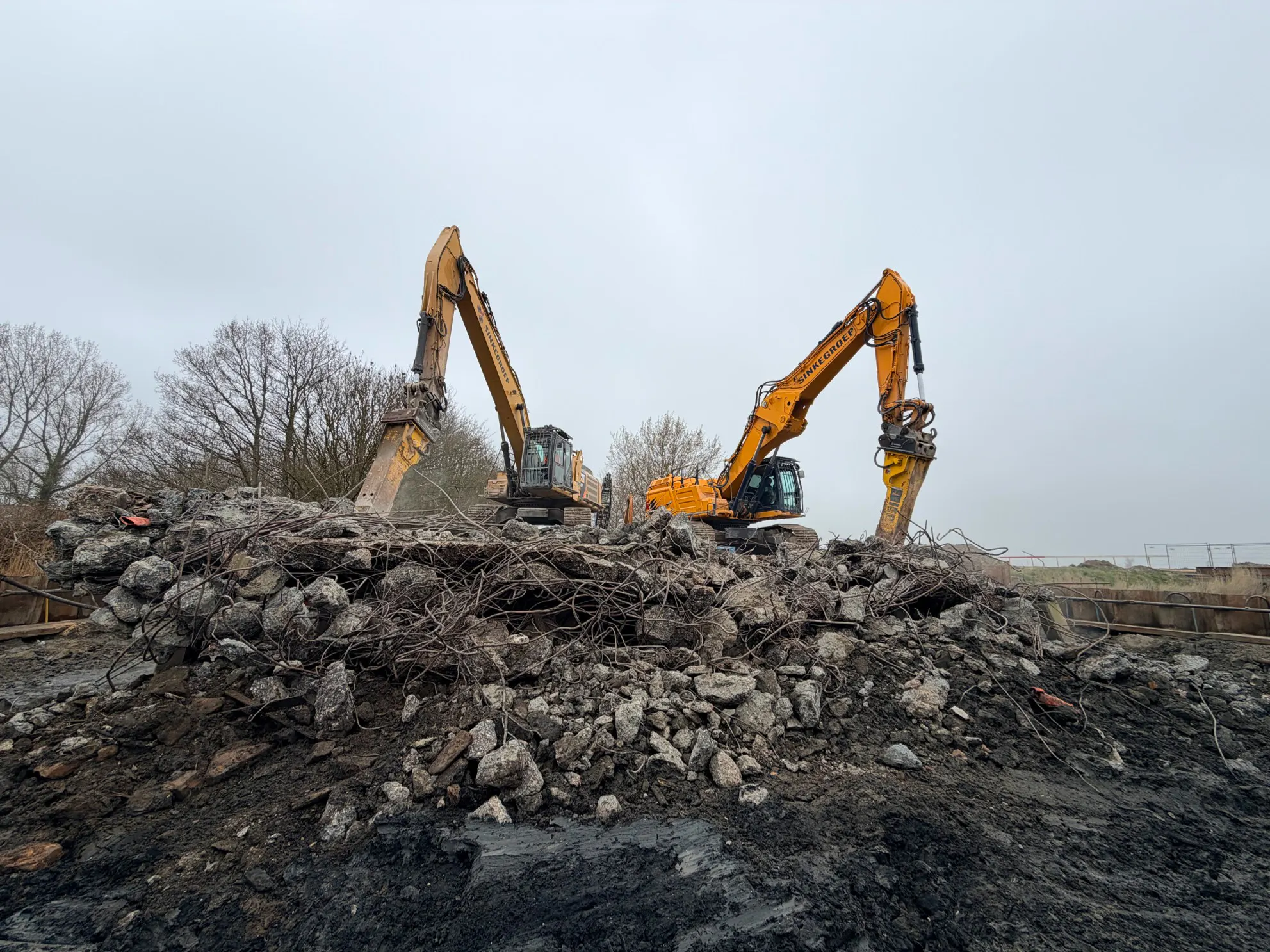
Circular demolition doesn’t start at the crusher, it starts with the demolition itself. The cleaner concrete and rebar are separated on site, the higher the value at which the material returns to the chain. A hydraulic pulveriser on the excavator takes care of that separation work.
Clean streams
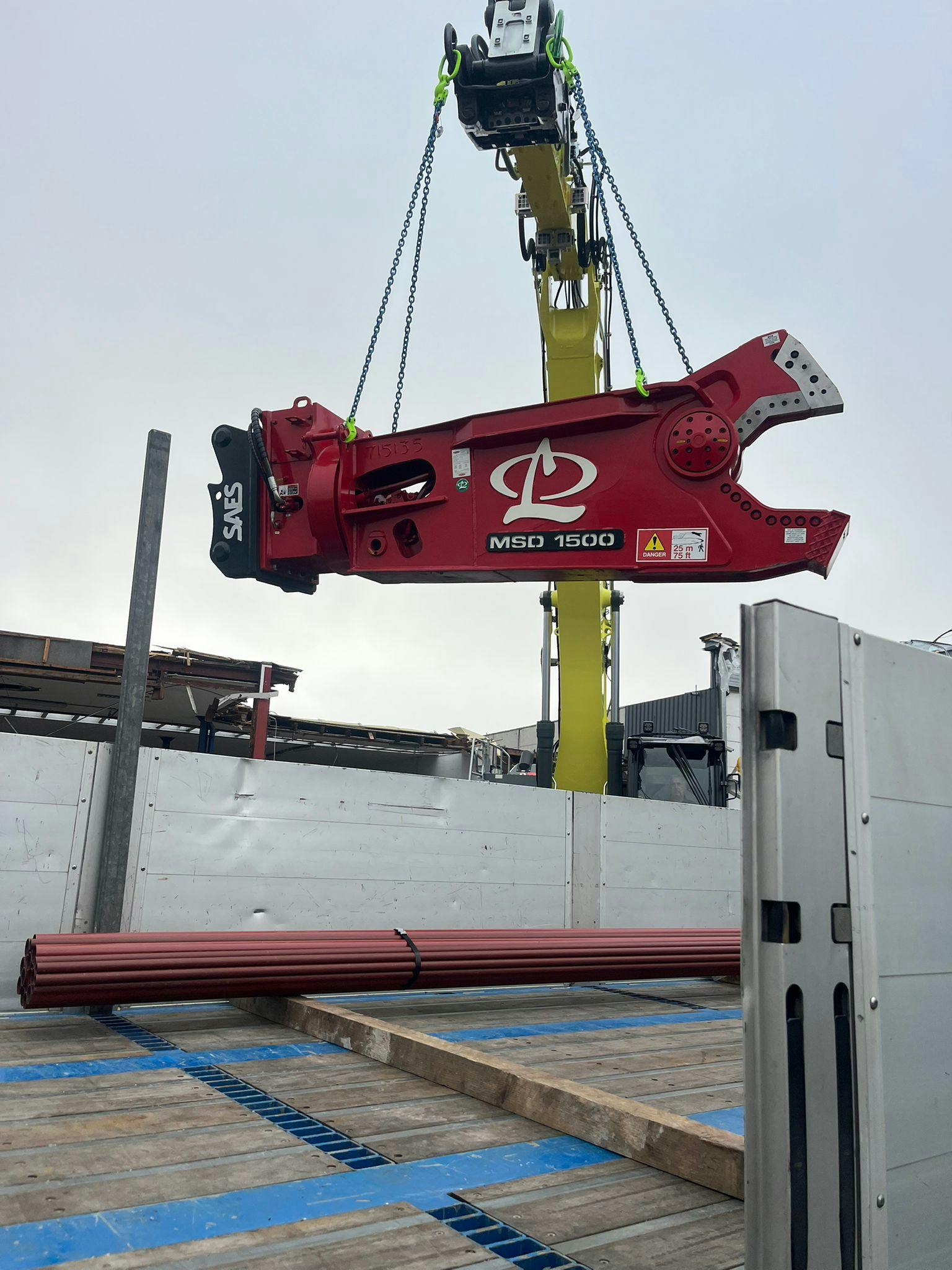
Reinforced concrete as a mixed stream is worth little. It needs further processing afterwards, it adds transport and the quality of the rubble remains limited. A pulveriser works with two hydraulically driven jaws that crush the concrete and press it off the rebar. What remains are two streams: concrete rubble and reinforcing steel that can go straight off as scrap.
For the demolition contractor, that mainly means less reprocessing, less transport and a better return. Recycled concrete aggregate that goes back into new concrete as a gravel replacement needs clean input. The less steel and contamination it contains, the higher-grade the application. The same goes for the steel: a clean scrap stream fetches more than steel with chunks of concrete still attached. Separating at source isn’t just good for circular targets. It’s good for your margin too.
Rotating in use
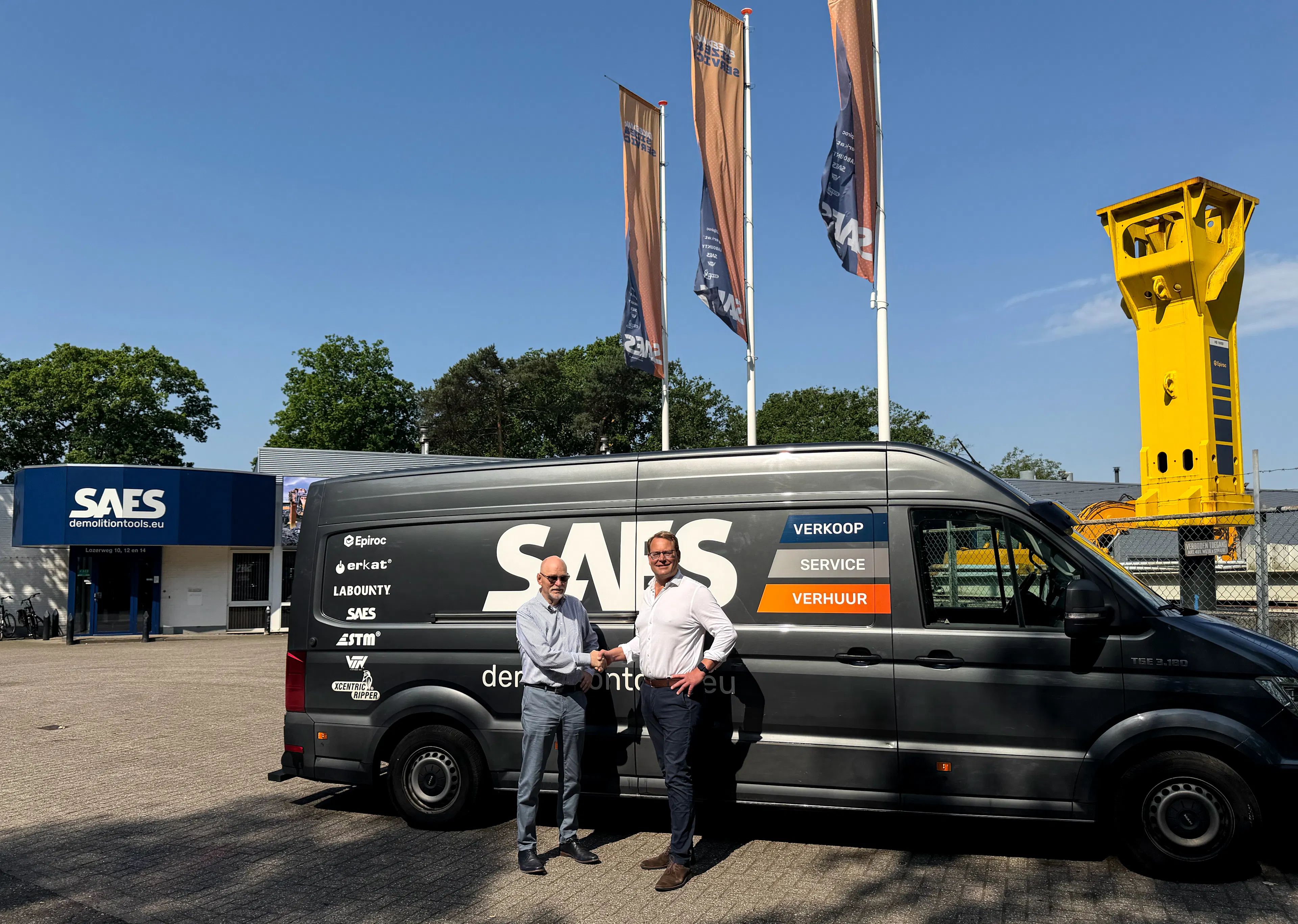
SAES is an official VTN dealer and supplies pulverisers in two versions. The rotating FP series turns a full 360 degrees. The operator sets the jaws at the right angle without moving the excavator. That makes the difference when demolishing walls, floors and ceilings, and in places with little room to manoeuvre.
In practice, that means shorter cycle times. Less repositioning means more time the pulveriser is actually working, and an operator who can keep working with focus.
Fixed and robust
The fixed VF series is built for secondary demolition at ground level. The operator uses it to reduce large concrete chunks released during demolition to a size suitable for removal or for the crusher. With no rotation mechanism, the design is simpler and there are fewer parts that need maintenance.
The two versions complement each other. The rotating pulveriser brings the structure down, the fixed one prepares the material for the next step.
Less downtime
Circular working is also about the lifespan of your equipment. A pulveriser that matches the machine class and is properly maintained lasts longer and performs more consistently. SAES has its own service engineers who carry out maintenance and repairs both on site and in our own workshop in Weert (NL). Less downtime, higher output on the project.